Lace and embroidery texture (inspiration can be found here).
Textured Silk Wedding Dress
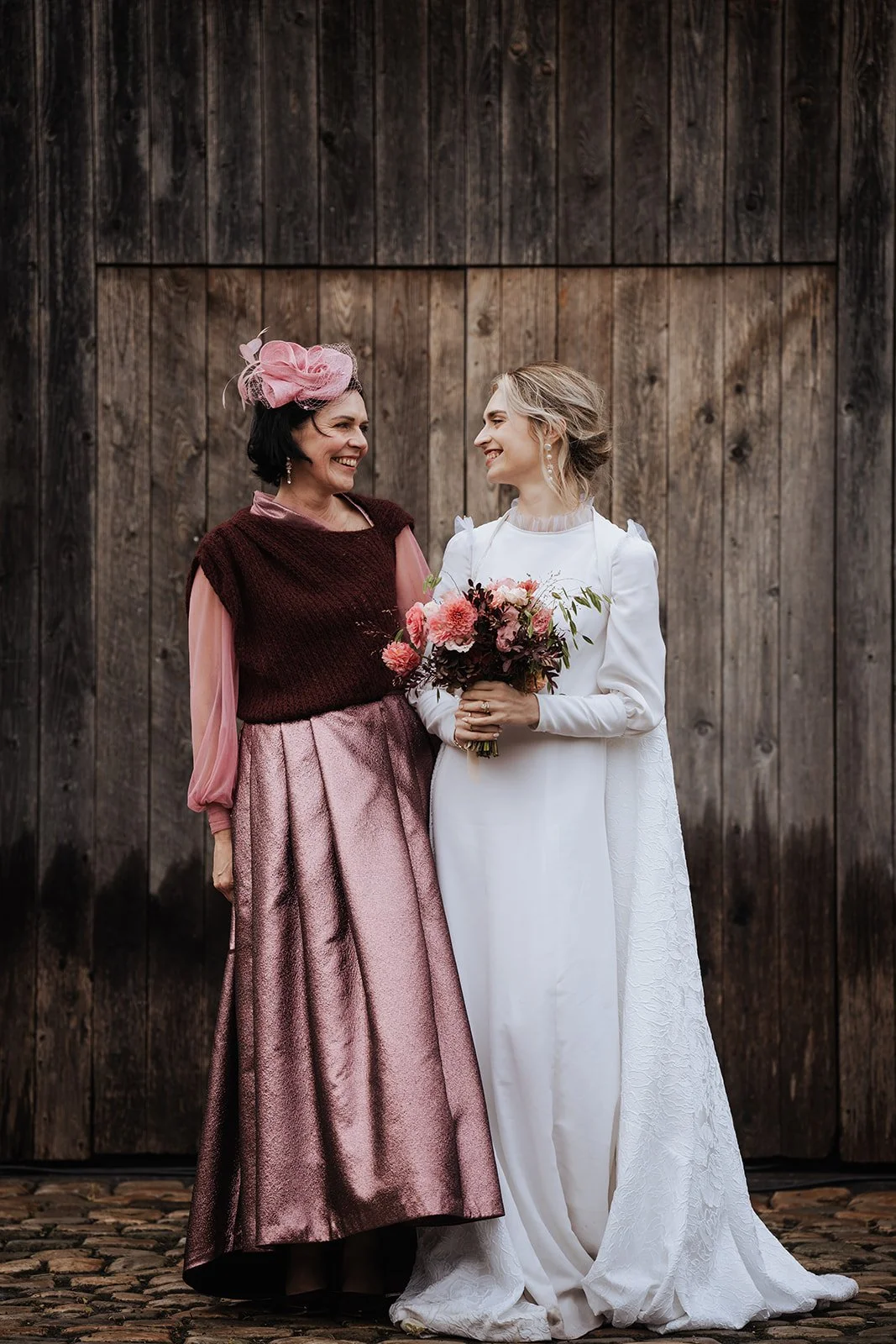
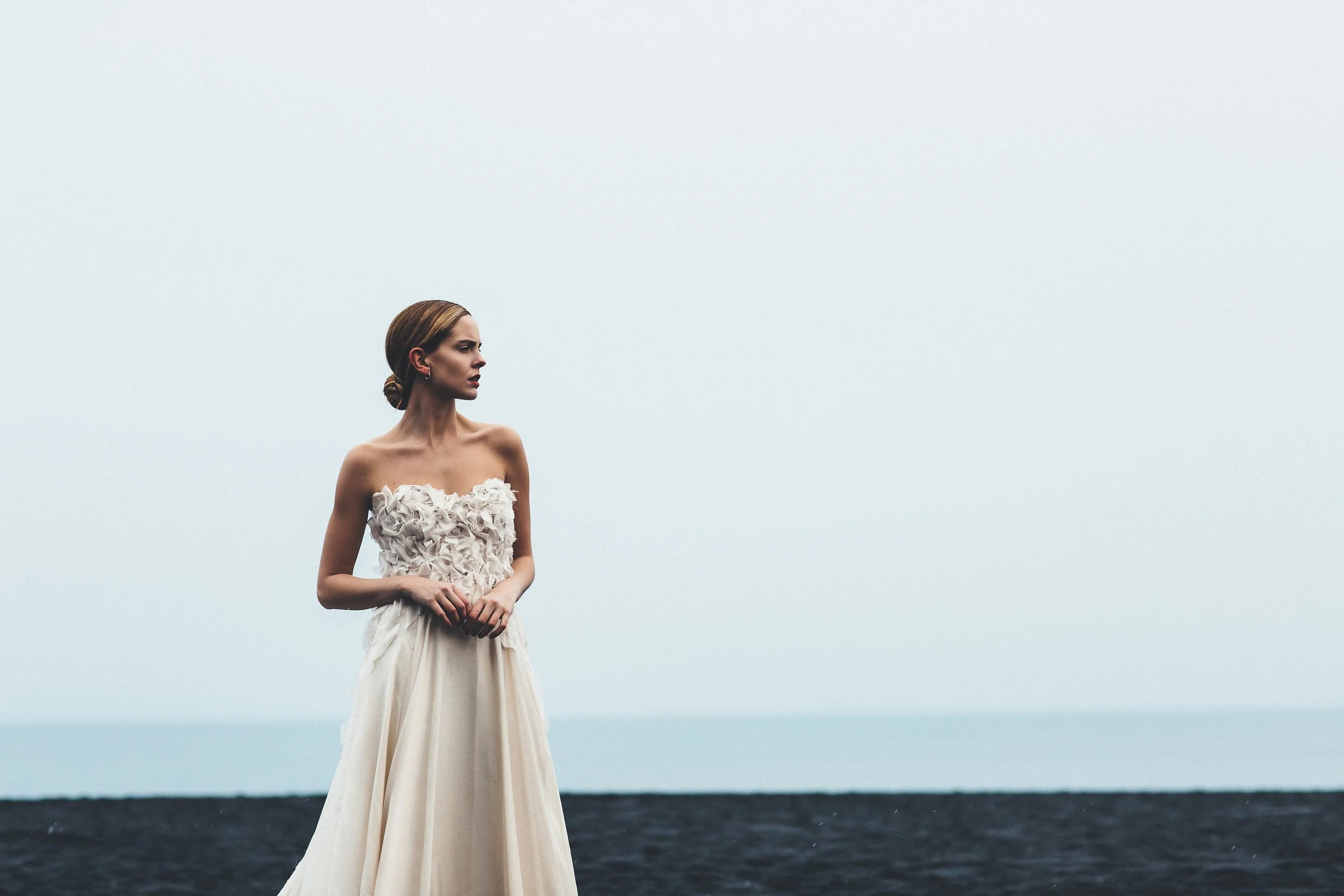
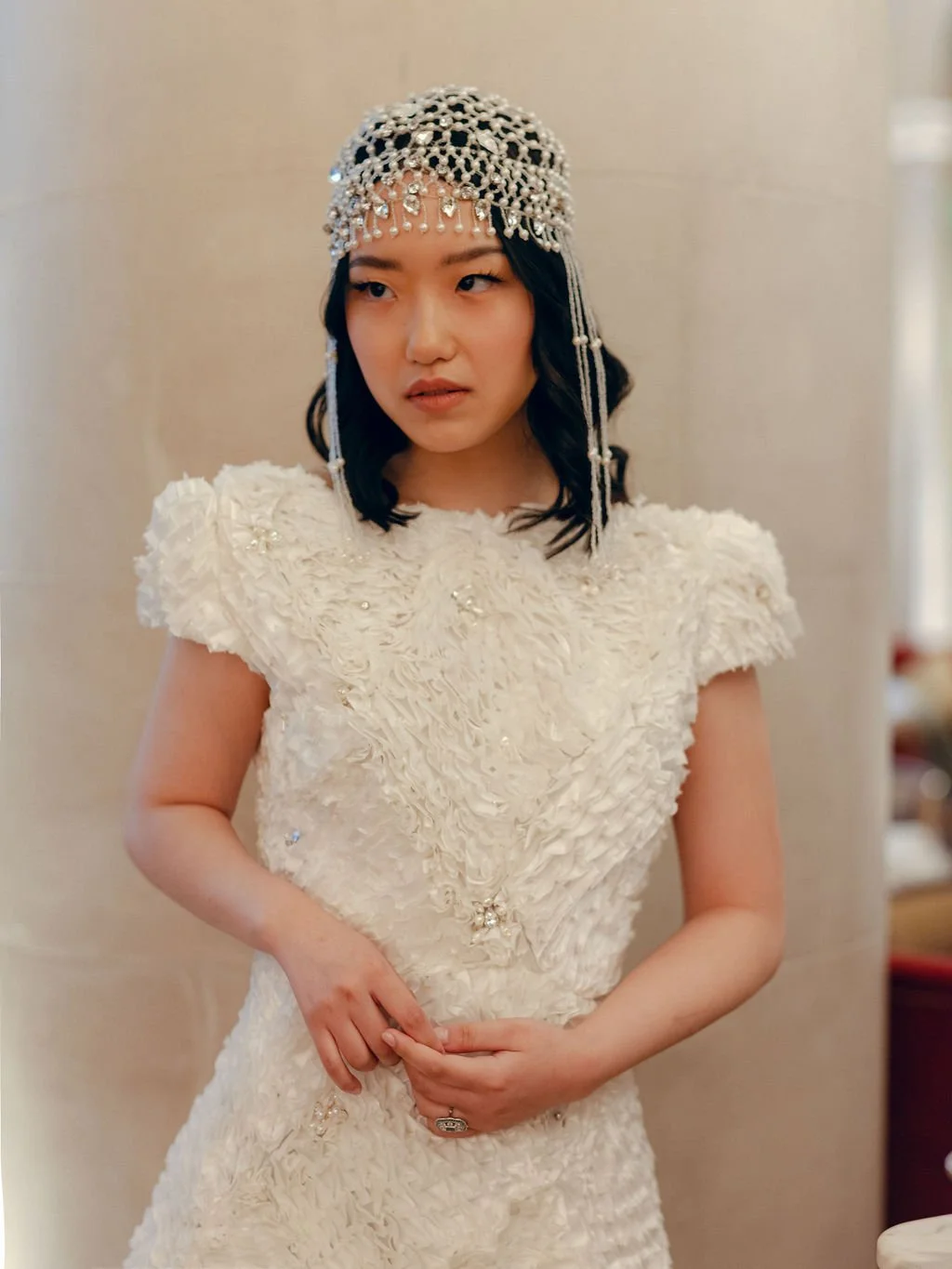
A sophisticated texture can create depth and richness in a wedding dress design which is a more subtle approach to detail.
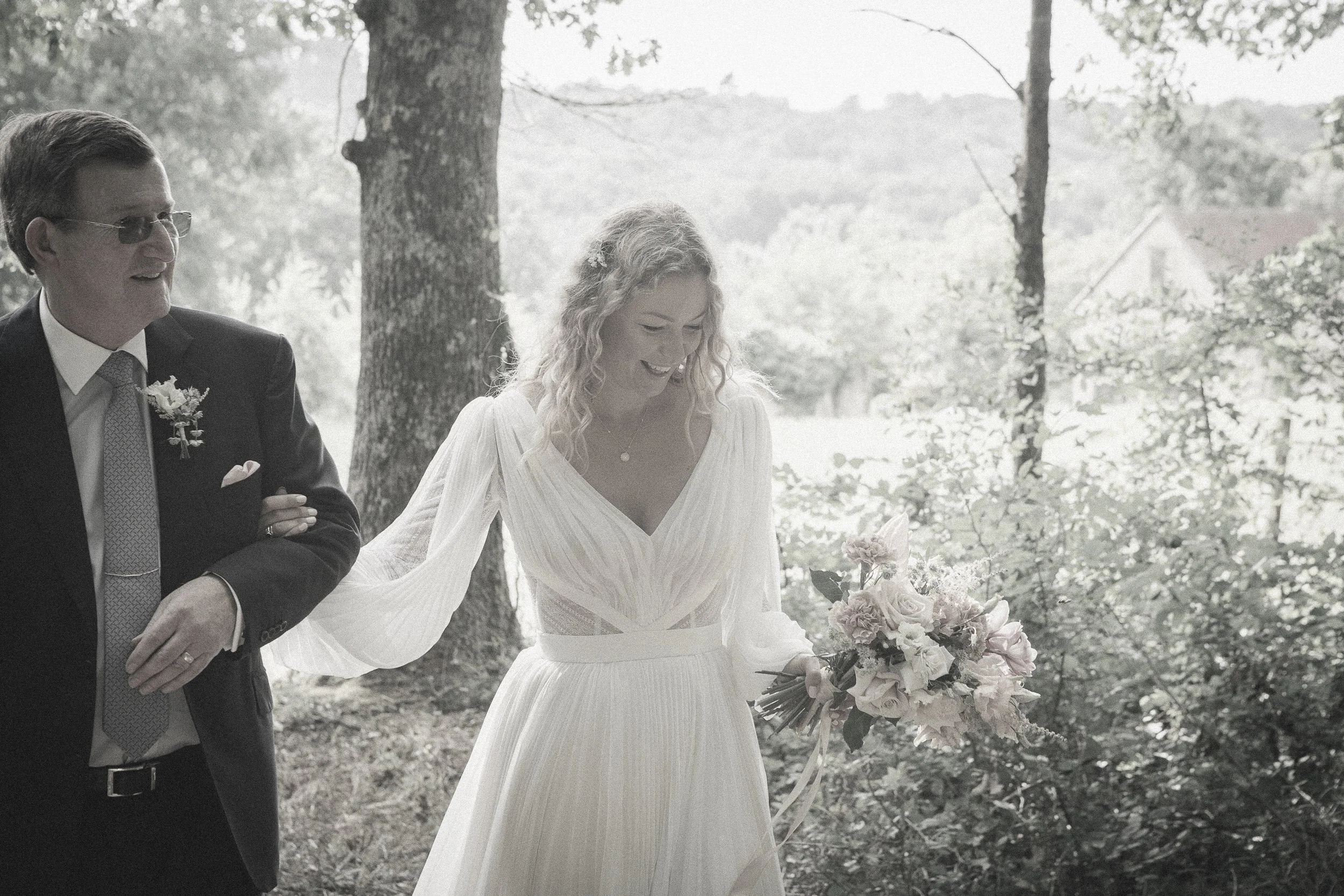


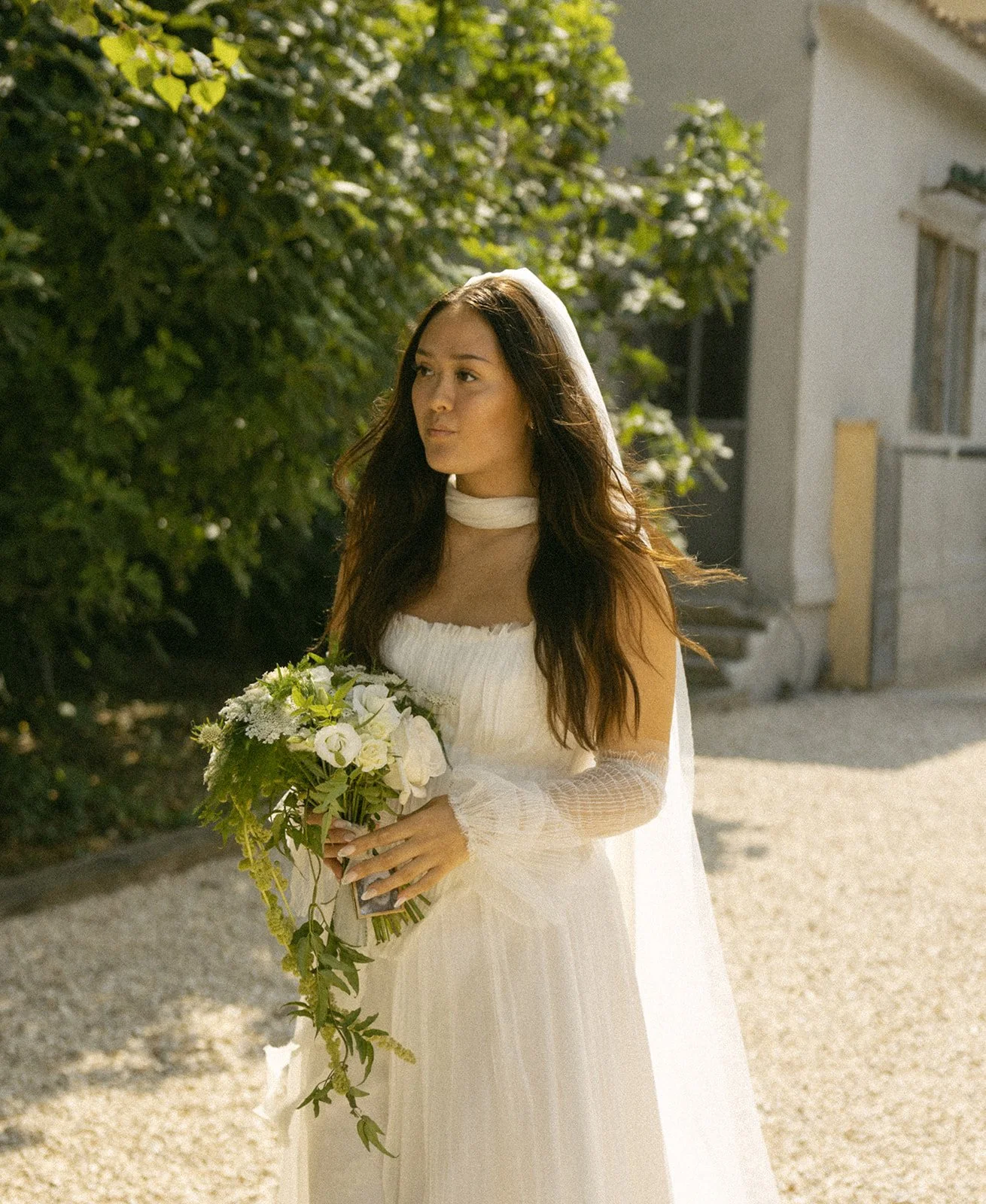
Pleated Silk
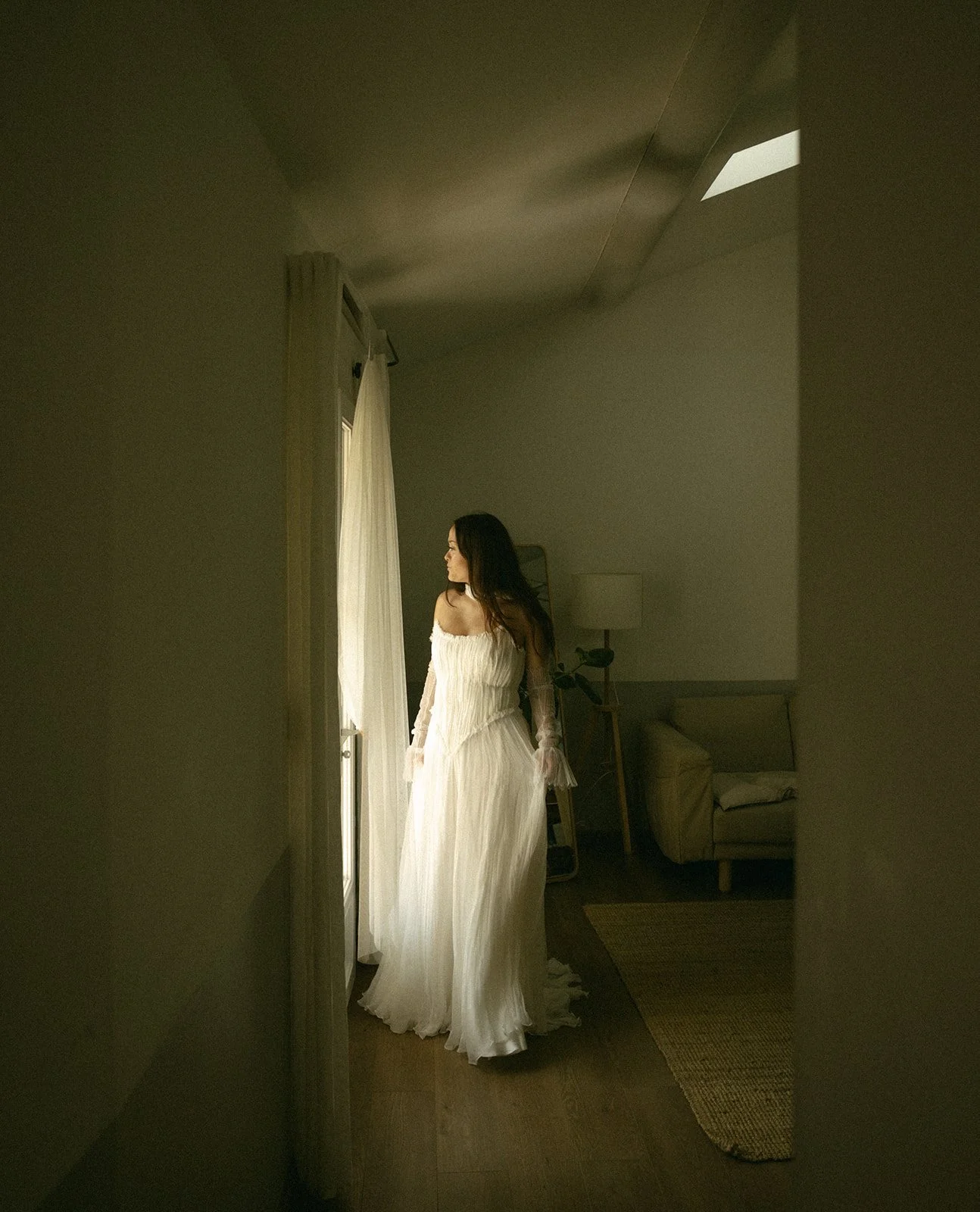
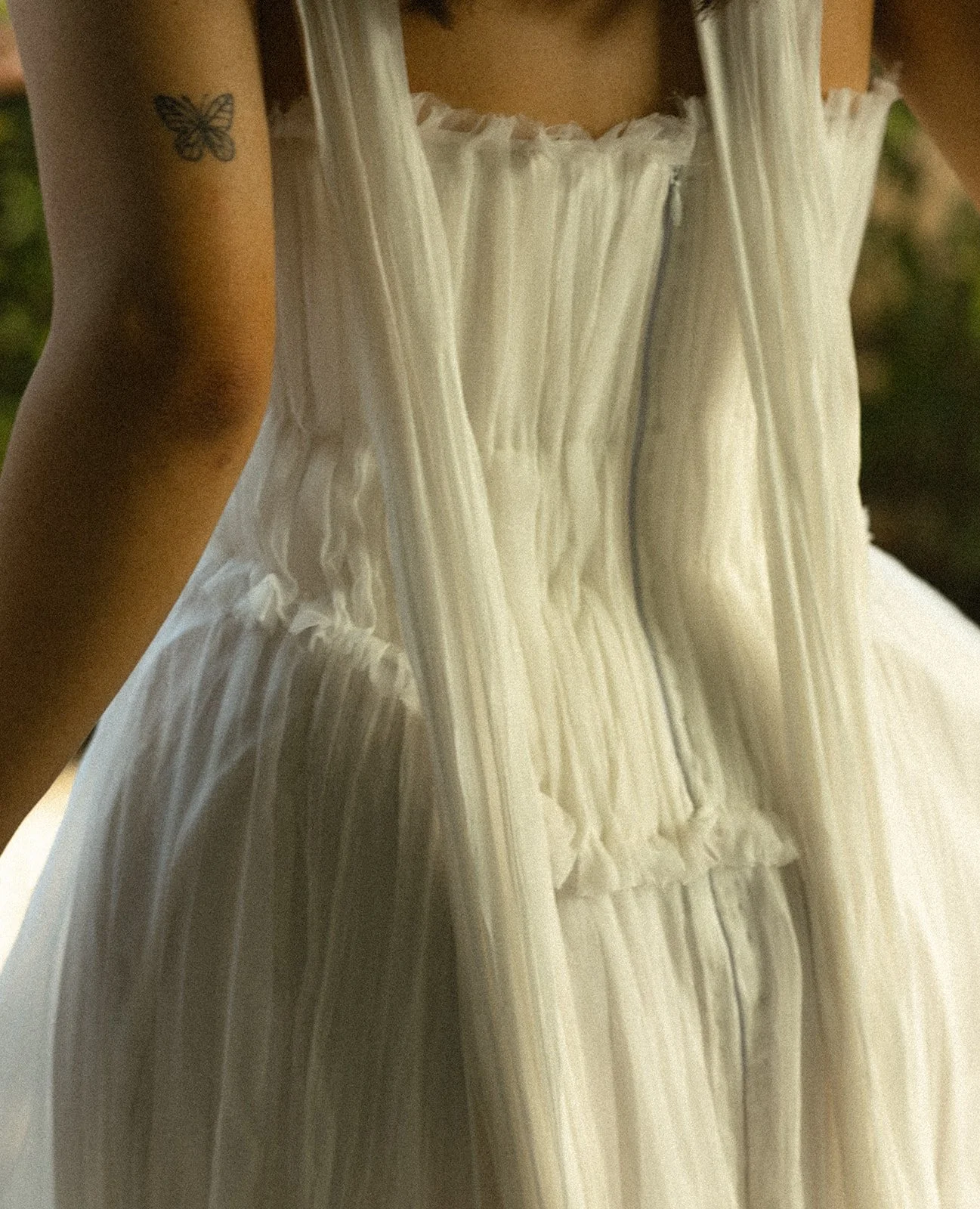
Pleating silk is a way to create volume and texture in a wedding dress and is be achieved with steam pleats set into the fabric using moulds by a specialist London company. There are many different styles to choose from, but most recognisable are Sun ray pleats which are like accordion pleats, but spreading out from diagonally across the fabric creating a sweeping and blouson effect.
Alternatively, tiny gathers created by machine and positioned and stitched in place by hand create a neat and directional texture. This is a really adaptable technique suited to chic and modern wedding dresses, as well as vintage style thirties and forties style wedding dresses. The technique can be applied giving either a geometric modern design, or a little softer to create a whimsical wedding dress design.
Bead and Sequin Fabric
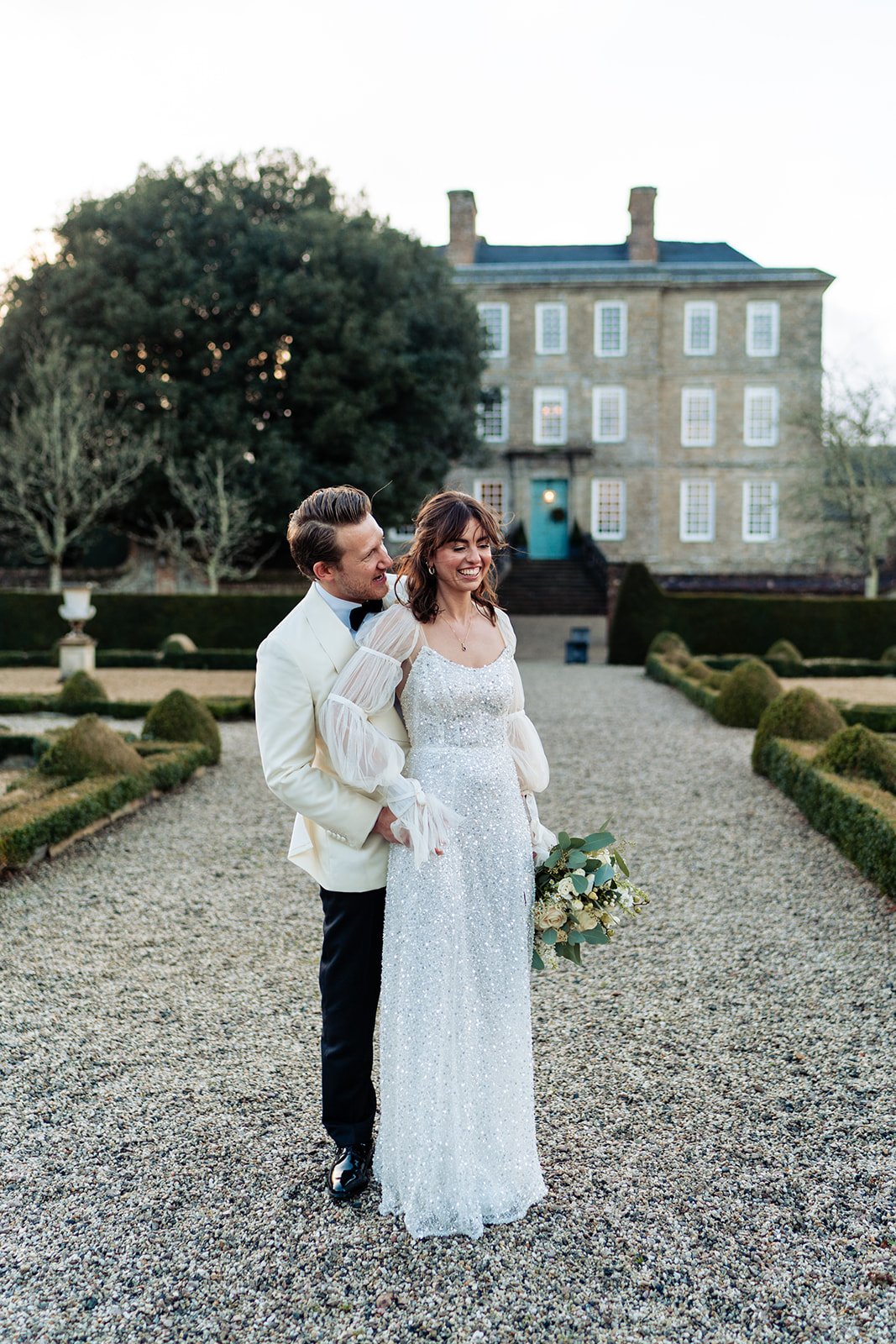
Bead and sequin fabric have a light reflective surface quality, which is more about texture than the intricate details of a bespoke bead embroidery. Take understated wedding dresses to the next level with sparkling fabrics. Due to the heavy drape of sequin and beaded fabrics, column and slim styles work best.


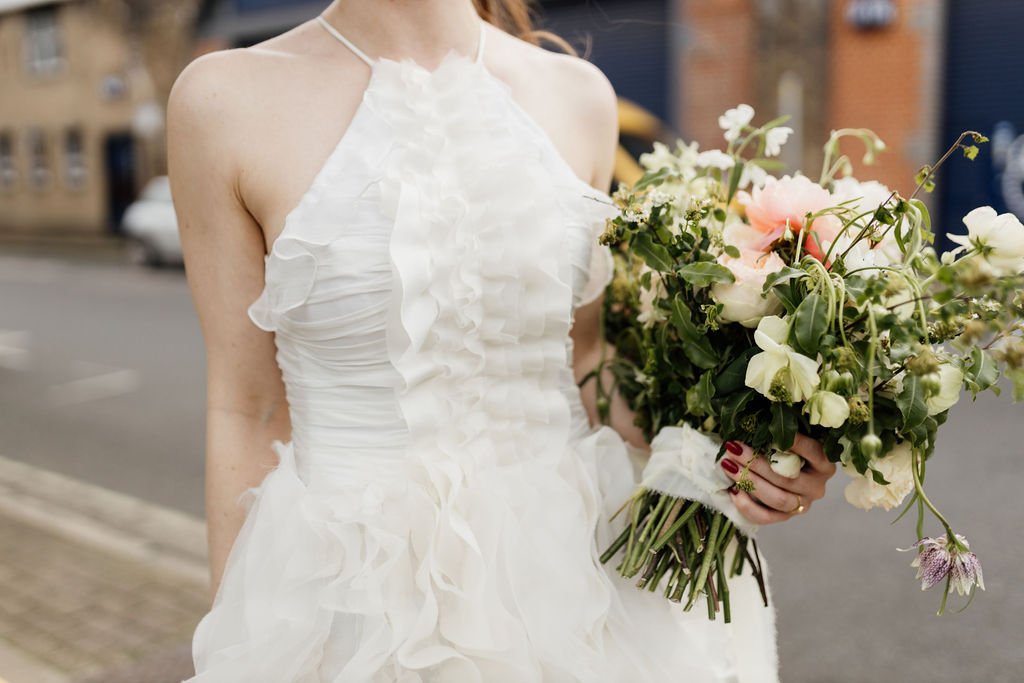
Ruffle and Frill Texture
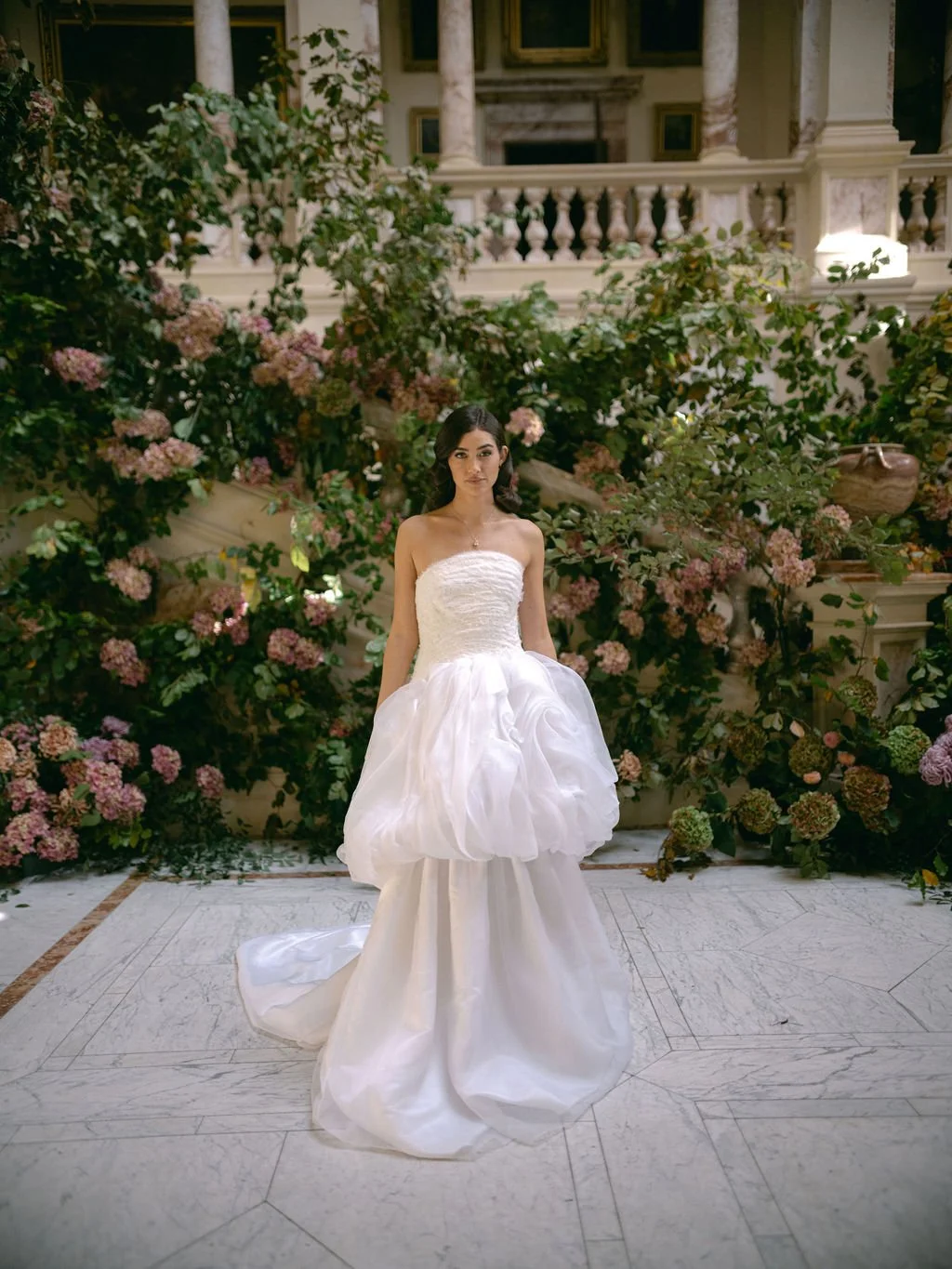
Frills can be created in several different ways by cutting the fabric differently. Each fabric type will create a different look and stiffness. They can be used as a single tier, layered densely, gathered, stretched, spiralled like a rose flower or in a random vermicelli design.

Woven Textured Fabrics
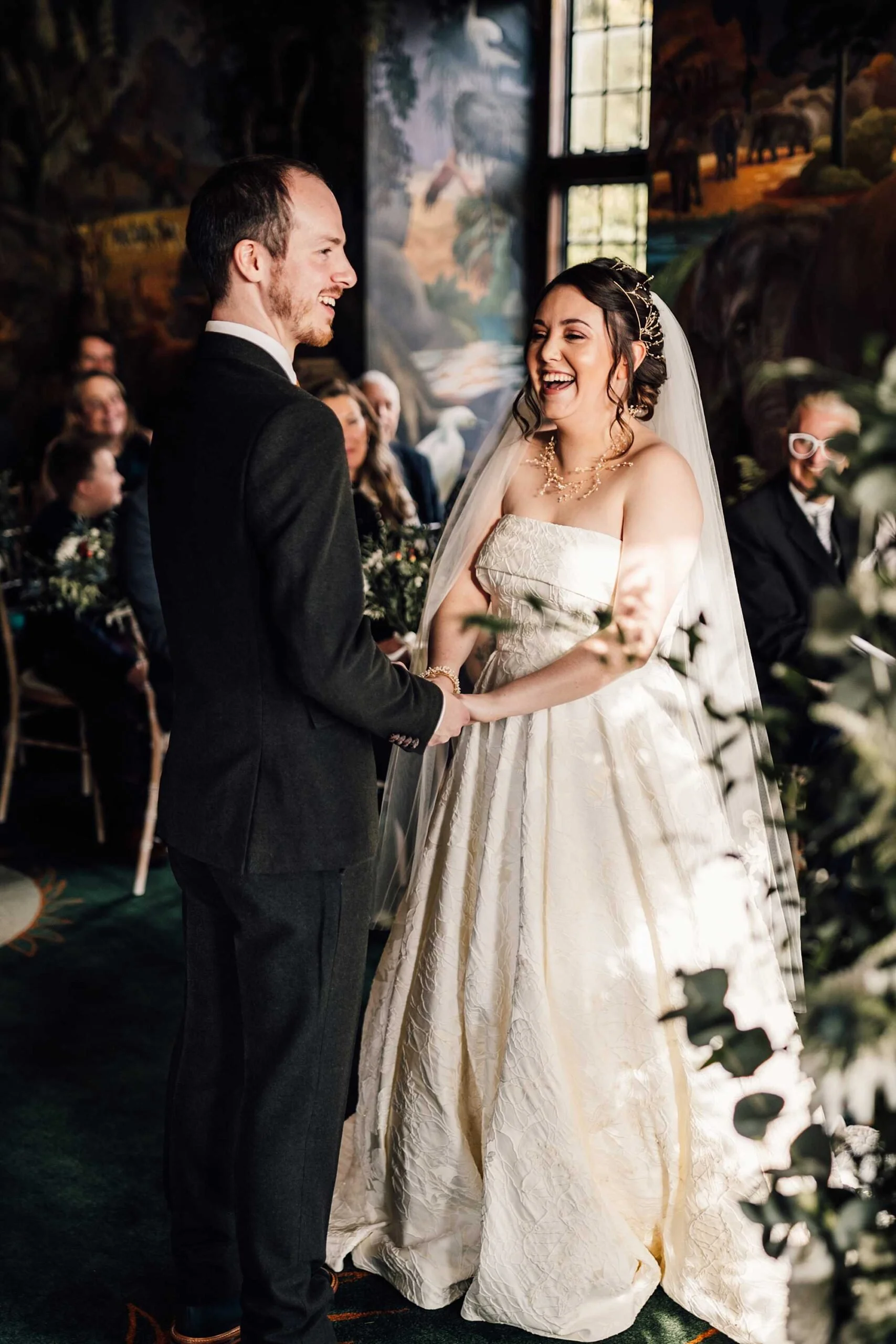
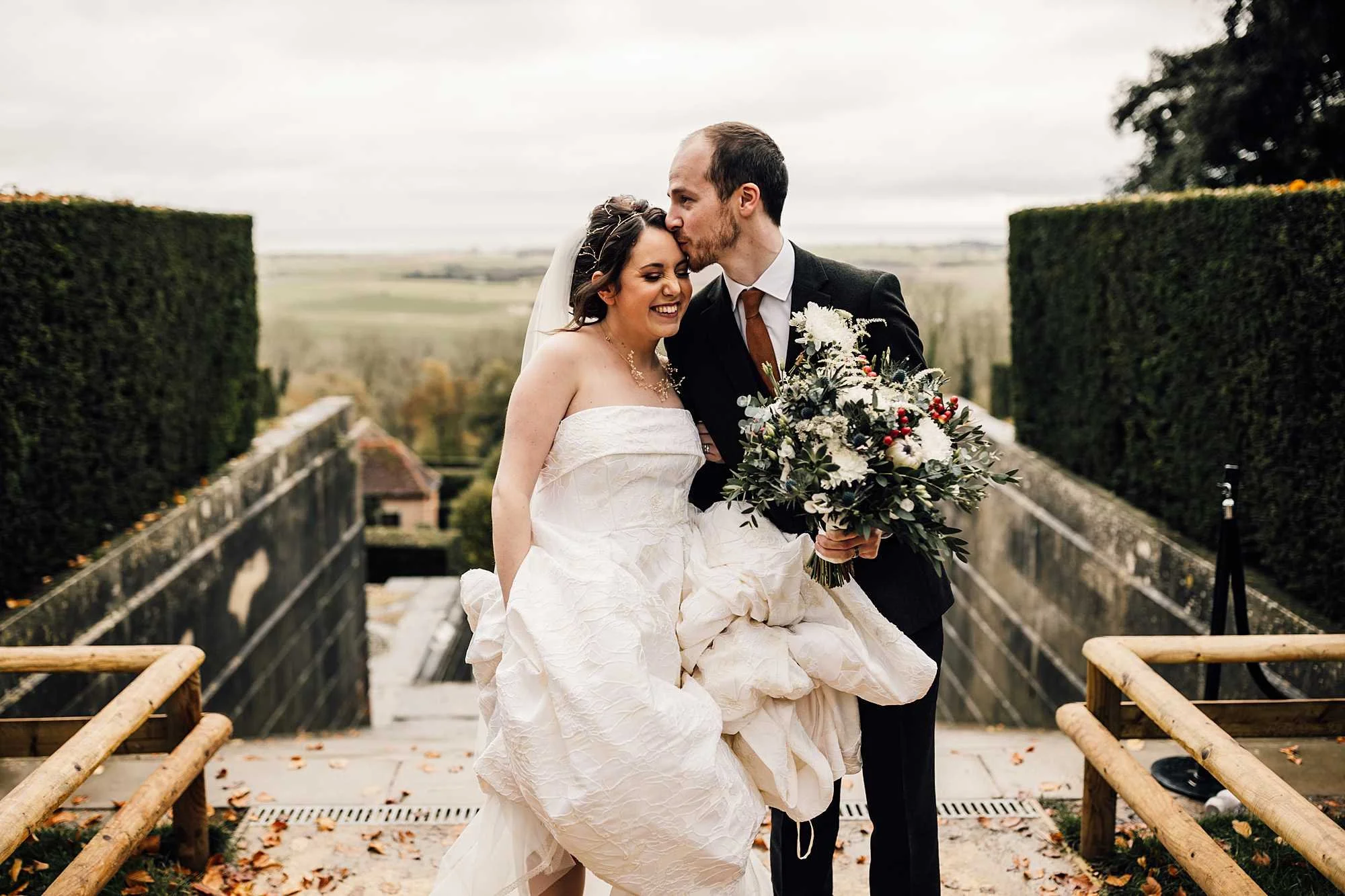
Fabrics which have a pattern within the weave are called Jacquard, Brocade or damask, and often feature floral or baroque style designs. While flexible, I find they are best suited to ballgown type and structured wedding dresses.